
That warm air blowing out of your dryer vent looks like prime real estate to a nesting bird. Here's how to tell if you've got a feathered tenant, why it's more dangerous than it sounds, and the right way to clear it out.
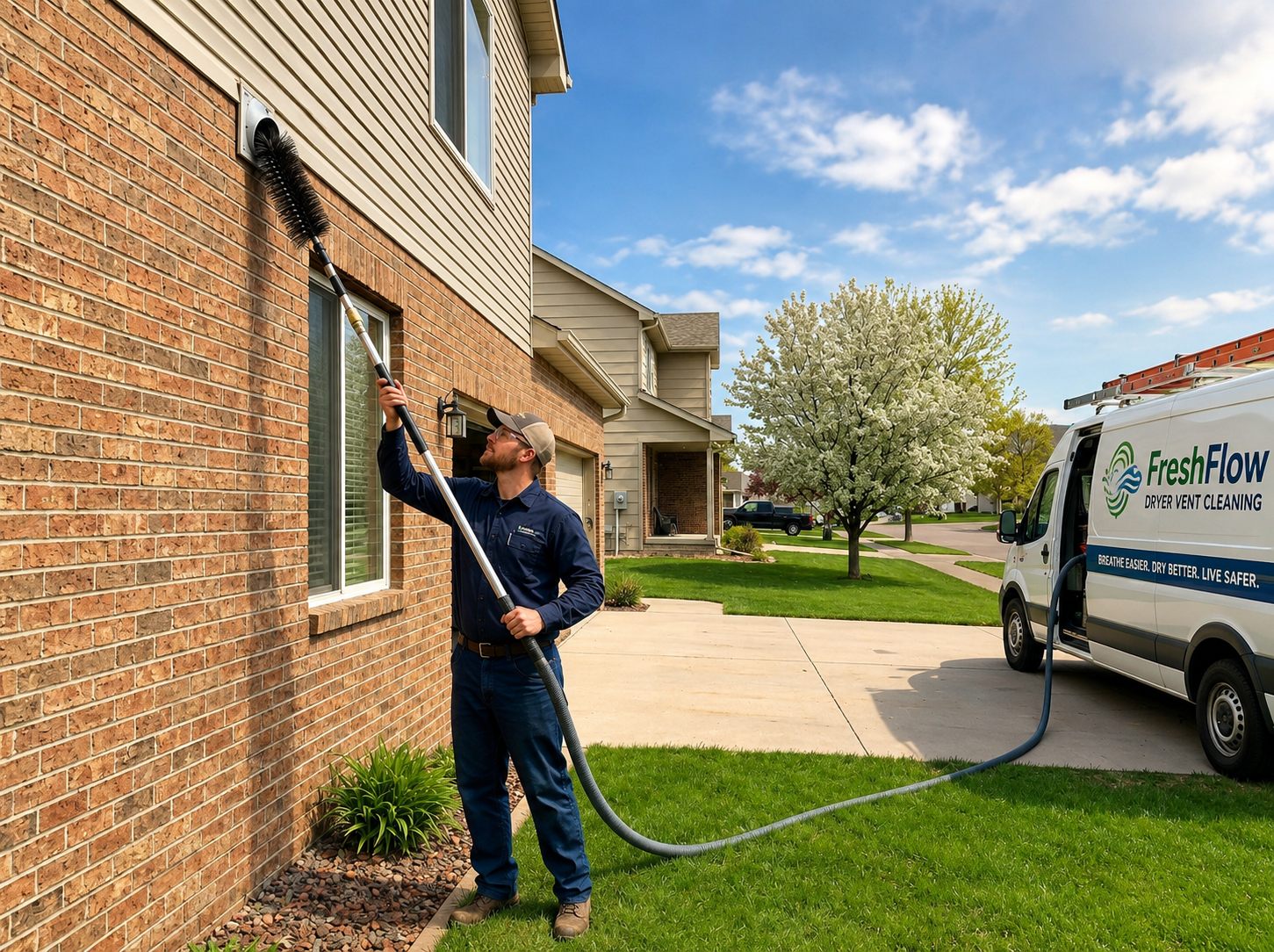
Every spring, we get calls from Sioux Falls homeowners who hear strange noises in the laundry room wall — or notice their dryer suddenly taking forever. The culprit is often a bird that found the exterior vent hood and decided it was the perfect spot to raise a family. It's more common than people think, and it's worth taking seriously.
From a bird's point of view, a dryer vent is ideal: it's elevated and protected from predators, it's sheltered from wind and rain, and it radiates warmth. If the exterior vent flap is broken, stuck open, or missing, the opening is basically an open door. Common vent-nesting birds include house sparrows and European starlings, which are especially fond of these spots.
Some of these overlap with a regular clog, so it's worth confirming. (See the full list of clogged dryer vent warning signs.)
A nest is made of dry twigs, grass, and feathers — extremely flammable material sitting right where your dryer pushes out hot air. Combine that with the lint that now can't escape, and you have ideal conditions for a fire. Blocked vents are a leading cause of dryer fires, and a nest makes it worse. (More on that in our dryer fire prevention guide.)
A nest restricts or fully blocks the vent. Your dryer runs hotter and longer, which wears out the heating element and can trip the safety shutoff. Over time, that means costly repairs or a dead dryer.
Nests can carry mites, parasites, and droppings. With the airflow blocked, some of that can be drawn back toward the home. For gas dryers, a blocked vent also raises the risk of carbon monoxide not venting properly — which is a safety issue you don't want to ignore.
We don't recommend it, for a few reasons. First, stop running the dryer immediately — running it with a nest in place is the highest-risk thing you can do. Second, reaching into the vent from a ladder is awkward and unsafe, and you usually can't tell if you've gotten all of it. Third, there can be a timing question: if there are eggs or chicks in an active nest, it's best to have someone assess the situation before disturbing it. (House sparrows and European starlings are non-native species and generally aren't protected, but many other birds are — so it pays to have it looked at properly rather than guess.)
When FreshFlow handles a nest, we:
Nest removal starts at $75 as an add-on to a cleaning. You can see all our pricing here.
The best long-term fix is a proper exterior vent cover with a working damper or a bird guard — one that lets air and lint out but keeps critters from getting in. Pair that with a regular cleaning schedule and you'll catch any problems early. A guard has to be designed for dryer vents, though; a standard screen can trap lint and create a different kind of clog, so it's worth getting the right one installed.
Stop using your dryer and let's clear it out safely. Get a fast, free estimate today.